How Hybrid Engine Optimization (HEO) Is Replacing Traditional SEO in 2026
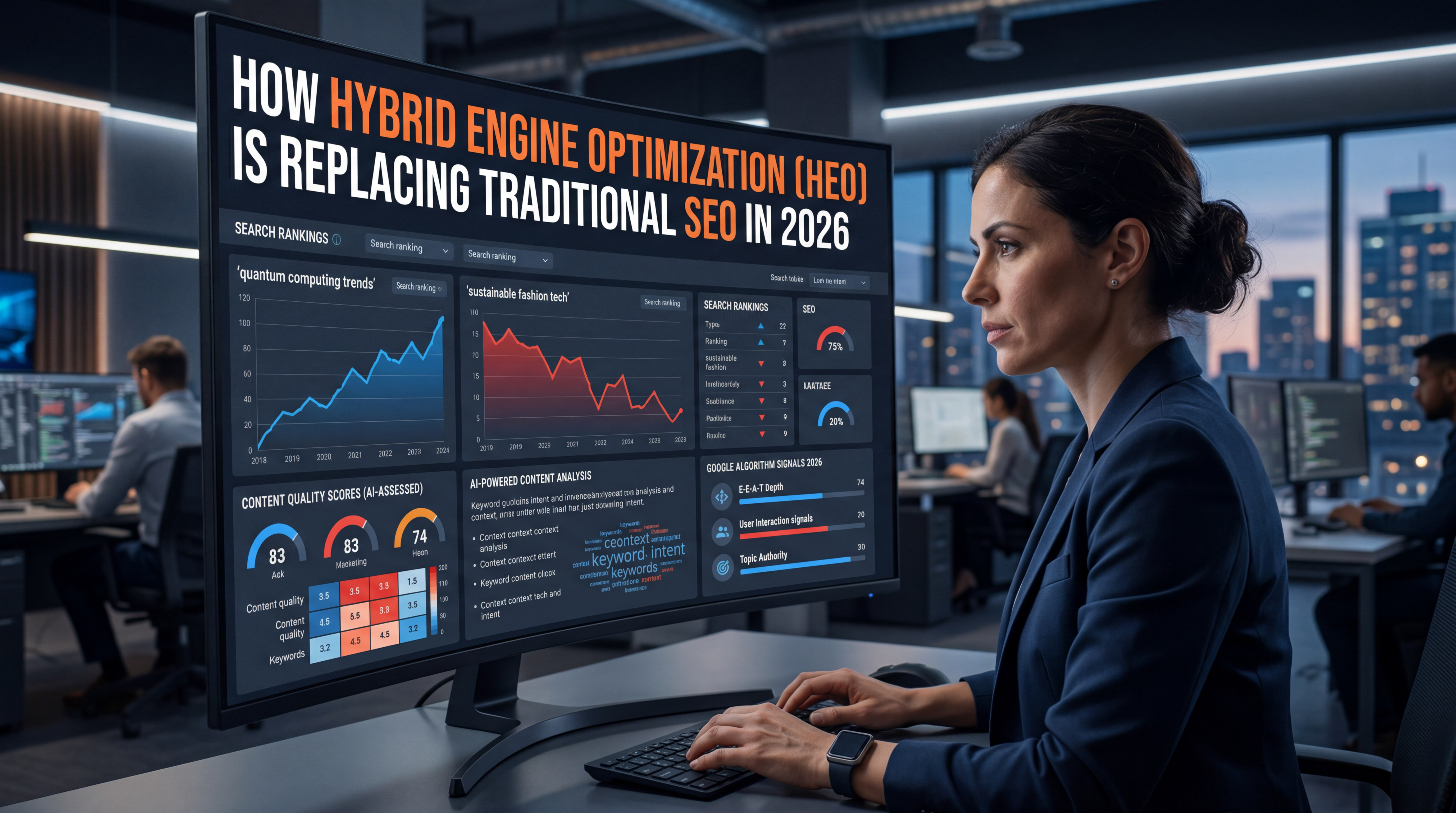
Hybrid Engine Optimization (HEO) is transforming digital visibility by combining traditional SEO with AI search optimization, helping brands rank in search engines and get cited in AI-generated answers. Businesses that adapt to HEO are gaining more visibility, trust, and conversions as search behavior shifts toward AI-powered platforms.
Introduction
Search is breaking apart. Not slowly. Fast. Traditional SEO in 2026 still chases blue links, but half the queries never reach a results page anymore. They get answered inside an AI chat window, a voice assistant, or a generative summary box sitting above everything else. Marketers who built their entire strategy around keyword density and backlink counts are watching traffic drop even when rankings hold steady. Because rankings stopped meaning what they used to mean. Hybrid Engine Optimization (HEO) is the response to that shift, and it's not a theory anymore. Agencies running HEO vs SEO tests side by side are seeing the gap widen every month, and the businesses that ignore it are bleeding visibility without realizing why.
What Hybrid Engine Optimization Actually Means
HEO is not a rebrand of SEO. It's a layered approach. One layer optimizes for classic search engines, the kind that still rely on crawlers, sitemaps, and link signals. The other layer optimizes for AI-driven engines, large language models that pull, summarize, and cite content directly inside their answers. Two engines. One content strategy. That's the hybrid part.
Old-school SEO asked one question: will Google rank this page? HEO asks a second question on top of that: will an AI model trust this content enough to quote it, summarize it, or recommend it as a source? Different question. Different answer. And most websites built before 2025 fail that second test badly.
Why Traditional SEO in 2026 Falls Short
Keyword stuffing is dead. Has been for years, honestly, but now it's actively harmful. AI crawlers penalize repetitive phrasing because it signals low-value, machine-generated filler. Meanwhile, content written for "10 best practices" listicles gets ignored by generative engines because there's nothing original to extract. Nothing to cite. No data point worth repeating.
Backlinks still matter, but their weight inside AI ranking models is murky at best. Some platforms barely factor them in. Others use them as a trust signal but not a visibility driver. So businesses pouring budget into link-building campaigns are often optimizing for an engine that's losing relevance, while the engine gaining relevance runs on entirely different rules.
The Core Pillars of HEO
Structured Data Becomes Non-Negotiable
Schema markup used to be a nice-to-have. Now it's the entry ticket. AI engines parse structured data to understand context fast, without guessing. Pages without proper schema get skipped during the retrieval phase, before the content quality even gets evaluated. Skipped. Not ranked low. Skipped entirely.
Conversational Query Matching
People don't type "best running shoes 2026" into a chat window. They type "what running shoes work for someone with flat feet who runs on pavement." Longer. Specific. Conversational. HEO content gets built around these exact phrasings, because that's how generative engines retrieve and match source material.
E-E-A-T Gets Teeth
Experience, Expertise, Authoritativeness, Trust. Google introduced this years ago, and most brands treated it as a soft guideline. AI engines treat it as a filter. Content without verifiable authorship, real data, or industry credibility gets filtered out of citation pools automatically. Anonymous blog posts with no byline and no sourcing simply don't get pulled into AI-generated answers anymore.
HEO vs SEO: A Real Comparison
Traditional SEO measures success through rankings, impressions, and click-through rates from a results page. HEO measures success through citation frequency, brand mentions inside AI-generated answers, and referral traffic from sources that didn't exist three years ago.
A page can rank #1 on Google and still get zero mentions inside ChatGPT, Perplexity, or Gemini summaries. That page is winning the old game and losing the new one. And the new one is where a growing share of buying research happens, especially in B2B and high-consideration purchases.
Conversion data backs this up. Traffic coming from AI-engine citations tends to convert higher than average organic traffic, because the user already received a recommendation before clicking through. They're not browsing anymore. They're verifying. That's a warmer lead by default.
How Businesses Are Adapting
Content teams are rewriting cornerstone pages to include direct, quotable answers near the top, before the explanation, before the fluff. Original research, proprietary data, and first-hand case studies are getting prioritized over generic advice articles, because generic advice is exactly what AI models already know and don't need to cite.
Technical teams are auditing site architecture for AI crawler access, llms.txt files, and clean structured markup across product pages, FAQs, and service descriptions. Not glamorous work. But it's the foundation everything else sits on.
Brand teams are tracking a new metric: share of AI voice. How often does a brand get mentioned when someone asks an AI engine about a product category. This number barely existed as a tracked metric in 2024. Now it's part of quarterly reporting for businesses that take HEO seriously.
Conclusion
The shift from traditional SEO in 2026 to Hybrid Engine Optimization isn't a future trend anymore. It's already happening, and the businesses adapting early are capturing visibility inside AI-generated answers while competitors fight over shrinking organic real estate. HEO doesn't replace SEO completely, it builds on top of it, layering AI-engine readiness over the foundation that already exists. Brands that treat both engines as equally important, and structure content for citation as much as ranking, are the ones converting research-stage interest into actual leads. The ones that don't will keep wondering why their rankings look fine but their pipeline doesn't.
Want a content strategy built around HEO from day one? Anurag Marketing helps brands get cited by AI engines and ranked by traditional search, both at the same time. Reach out to start the audit.